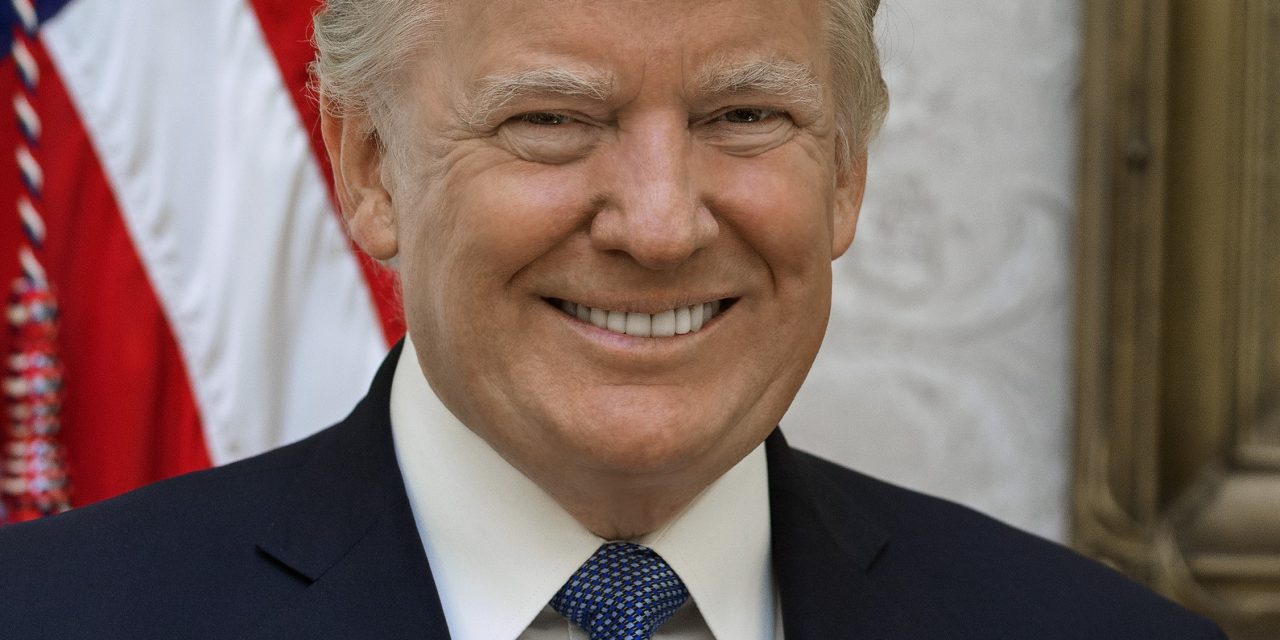
A New York businessman turned television celebrity and, later, the most disruptive figure in recent American politics: the first president to serve non-consecutive terms since 1893, and the first to take office with a prior criminal conviction. A deeply polarizing figure — hailed by supporters as an anti-establishment leader and denounced by critics as a threat to democratic institutions.
Date of birth and death
- Birth: June 14, 1946, in a United States emerging from World War II as a global power and experiencing unprecedented economic growth.
- Death: N/A (still alive, September 2026).
Years of life
He is currently 80 years old.
Place of birth and death
- Place of birth: Jamaica Hospital, Queens, New York City, United States.
- Place of death: N/A.
Parents and the social class they belonged to
He is the fourth of five children born to Fred Trump and Mary Anne MacLeod. His family embodies two of the great migratory currents that shaped 20th-century America: German and Scottish.
- Father: Frederick Christ “Fred” Trump (1905–1999), a successful New York real estate developer specializing in middle-class housing in Queens, Brooklyn, and Staten Island. His own father, Friedrich Trump, had emigrated from Germany in 1885, during the height of European migration.
- Mother: Mary Anne MacLeod Trump (1912–2000), a Scottish immigrant who arrived in the United States in 1930, just before the Great Depression; a homemaker who later engaged in philanthropic work.
- Social class: His parents’ trajectory reflects the classic “American Dream” narrative and the upward social mobility typical of 20th-century America; the family belonged to the upper bourgeoisie / wealthy business class thanks to the fortune Fred Trump built.
Siblings
He was the fourth of five siblings:
- Maryanne Trump Barry — federal appellate judge (died 2023).
- Fred Trump Jr. — commercial pilot; his 1981 death from alcoholism influenced Donald’s decision to abstain from alcohol and tobacco.
- Elizabeth Trump Grau — retired bank executive.
- Robert Trump — Trump Organization executive (died 2020).
Spouse and the social class she belongs to
He has married three times, always to women connected to the world of fashion or entertainment:
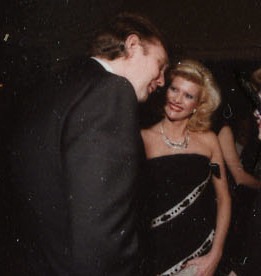
- Ivana Zelníčková (1977–1992, divorced) — Czechoslovak model and businesswoman, from a middle-class background in her home country (died 2022).
- Marla Maples (1993–1999, divorced) — American actress and television personality, upper-middle class.
- Melania Knauss (married since January 22, 2005, current) — Slovenian-American former model, raised in a middle-class family in Slovenia (then part of Yugoslavia); became First Lady of the United States.
Children
He has five children — Donald Jr., Ivanka, Eric, Tiffany, and Barron — and, according to available sources, ten grandchildren. His older children have actively participated in his businesses and campaigns, becoming influential public figures in their own right and making the family a central element of his personal and political brand.
Famous relatives
- Fred Trump (father) — prominent figure in 20th-century New York real estate development.
- John G. Trump (uncle) — physicist and electrical engineer recognized at MIT.
- Maryanne Trump Barry (sister) — prominent federal judge.
- Mary L. Trump (niece) — clinical psychologist and author of the critical memoir Too Much and Never Enough (2020).
- Ivanka Trump (daughter) — businesswoman, model, and former senior White House advisor.
- Jared Kushner (son-in-law) — real estate investor and former senior White House advisor.
Education
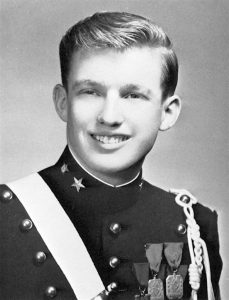
- Childhood and military discipline: he grew up in Jamaica Estates, an affluent Queens enclave; after behavioral problems, his parents sent him to the New York Military Academy, an experience that instilled habits of discipline, competitiveness, and leadership.
- University: he spent two years at Fordham University (Bronx, New York, 1964–1966) before transferring to the Wharton School at the University of Pennsylvania, graduating in 1968 with a degree in Economics. This path placed him within an academic elite that fueled his business ambitions.
Work life (experience)
- The family business: after graduating in 1968, he joined Elizabeth Trump & Son, focused on middle-class housing, but his ambition was aimed at Manhattan, the country’s financial and cultural epicenter.
- The builder of Manhattan (1970s–80s): in a New York gripped by fiscal crisis and rising crime, Trump saw opportunity where others saw ruin. In 1980 he transformed the deteriorated Commodore Hotel into the Grand Hyatt New York, a symbol of urban revitalization, and in 1983 he opened Trump Tower, a luxury skyscraper that became an icon of the decade of excess. His ostentatious style and his ability to turn his surname into a brand reflected the spirit of the Reagan era.
- Expansion and crisis (1980s–90s): he diversified into casinos, hotels, golf courses, and branded products, but the early-1990s recession hit hard: several of his companies filed for Chapter 11. These corporate bankruptcies allowed him to restructure debt without losing his personal wealth, though they temporarily damaged his reputation. He reinvented himself by licensing his name to outside developers, anticipating the rise of “personal branding” in the 21st century.
- Author and television celebrity: in 1987 he published The Art of the Deal, which cemented his image as the archetype of the successful businessman. Between 2004 and 2015 he starred in The Apprentice, a reality show that turned him into a national celebrity and a forerunner of the “celebrity-politician” at a time when politics and entertainment were increasingly intertwined. He was also co-owner of the Miss USA and Miss Universe pageants (1996–2015).
- Public service and politics:
- He explored presidential bids in 1988, 2000, and 2012, without formally running.
- He announced his definitive candidacy on June 16, 2015, with a direct, controversial speech centered on national identity, capitalizing on discontent with globalization, immigration, and political elites through a populist message and innovative use of social media.
- 45th President of the United States (2017–2021).
- 47th President of the United States, after defeating Kamala Harris in 2024; in office since January 2025 and currently serving.
Languages spoken
English, his native language. He is not known to be fluent in other languages.
Where he has lived throughout his life
- Queens, New York (Jamaica Estates) — childhood and youth.
- Manhattan, New York — primary residence during his business career, in the Trump Tower penthouse.
- Washington, D.C. — the White House, during his presidential terms.
- Palm Beach, Florida — Mar-a-Lago, officially established as his permanent legal residence since 2019.
Political ideology
He is generally classified within pop-nationalist or populist right-wing conservatism, a current often referred to as “Trumpism,” within the Republican Party, which he has profoundly reshaped. His main pillars:
- Economic: trade protectionism (“America First”), deregulation, and reduced corporate and individual taxes.
- Immigration: strict border control, tighter immigration enforcement, and deportation policies.
- Foreign policy: skepticism toward traditional multilateralism (withdrawal from the Paris Agreement during his first term), questioning of alliances such as NATO, and a transactional approach to bilateral diplomacy.
His rise coincided with widespread disenchantment toward globalization and political elites, and he transformed political communication through the intensive use of social media. This is a subject with sharply divided views: his supporters see him as a nationalist defender of sovereignty and American workers, while his critics place him within the authoritarian populist right. There is no consensus on this.
Famous phrases and quotes
- “Make America Great Again” — his main campaign slogan.
- “You’re fired!” — the catchphrase popularized on “The Apprentice,” which entered popular culture.
- “Without borders, we don’t have a country.”
- His book The Art of the Deal (1987) captures much of the negotiating philosophy behind the public image he built.
Achievements he is remembered for
- His 2016 electoral victory, defeating Hillary Clinton with no prior political or military experience.
- The 2017 tax reform (Tax Cuts and Jobs Act).
- Appointing more than 200 federal judges, including three Supreme Court justices (Gorsuch, Kavanaugh, and Barrett), consolidating a conservative majority on the Court.
- The Abraham Accords, which normalized diplomatic relations between Israel and several Arab countries.
- Renegotiating trade agreements: replacing NAFTA with the USMCA and imposing tariffs, particularly on China; tensions with China and direct meetings with Kim Jong-un.
- Operation Warp Speed, which accelerated COVID-19 vaccine development.
- Being the first president with a prior criminal conviction to take office, and the second to serve non-consecutive terms (after Grover Cleveland, 1893).
- His transformative impact on the Republican Party, American political culture, and global political communication — a legacy that, according to historical analysis, is still evolving.
Controversial events he is remembered for
- Two impeachments: the only president to be impeached twice by the House of Representatives (acquitted both times by the Senate) — in 2019 (abuse of power and obstruction of Congress) and in 2021 (incitement of insurrection).
- The Mueller investigation into Russian interference in the 2016 election.
- His handling of the COVID-19 pandemic, heavily criticized despite Operation Warp Speed.
- After losing the 2020 election, he alleged voter fraud without evidence accepted by the courts; this led to the events of January 6, 2021, when a mob stormed the Capitol.
- Between 2023 and 2024 he faced multiple legal proceedings, including a conviction for falsifying business records (New York, 2024), as well as cases related to classified documents and election interference.
- The suspension of his accounts on several social media platforms following the Capitol events.
- Various allegations of inappropriate conduct throughout his public career.
- An assassination attempt during a campaign rally in July 2024.
- The corporate bankruptcies of several of his companies in the 1990s and 2000s.
Critics’ views
They accuse him of posing a threat to democratic institutions, through his attacks on the electoral system, the courts, and the press. They attribute to him a central role in social polarization through rhetoric they consider populist, nativist, or confrontational. On foreign policy, they argue his isolationist approach damages the credibility of U.S. strategic alliances and the international order. For many analysts, he has become a symbol of contemporary debates over democracy, truth, and media power.
Supporters’ views
They see him as a leader outside the Washington establishment, standing up to traditional political, corporate, and media elites. They value his economic pragmatism — tax cuts, deregulation, and defense of local jobs and industries — and his firmness on national and border security, prioritizing American interests over international agreements. For them, his return to the White House in 2025 reflects the enduring strength of his political influence and the trust of a significant share of the American electorate.